I’ve been thinking about what else I could do to help students with understanding fractions. Since there are still times that I myself get confused, what else is there that I can do to help students understand. One of the articles explains how important it is to guide students to make connections between division and fractions. The starting point for understanding fractions is by using the equal sharing problems like we did in class and also presented in the article (National Council of Teachers of Mathematics, 2005). So, providing students with real life examples that establish connections.
Equal Sharing Problems
For this math journal, there will be two questions guiding me. The first is, if you wanted to begin working with fraction concepts in a Primary or Junior class, why might you start by exploring equal sharing problems or situations? What do equal sharing problems encourage students to work on or figure out? What might you consider when designing an equal sharing problem? As well as the question, why and how might you build or use a fraction kit in the classroom? Using equal sharing problems with students who have little experience with fractions is a good way to introduce fractions. Even though they may not have a lot of experience, they do however have experience with sharing food and with food in general. Using equal sharing problems gives students a visual to work with to begin solving the problem. Students also have the opportunity to work with a group or partner to solve these types of problems. An example might be, a class teacher orders 2 rectangular pizzas and they are split into tenths. If there are 10 students in the class, how many slices does each student get? Many students are familiar with having pizza, or things that are equally distributed, so they can picture this situation at home or at school. It is also a good introduction because you’re not starting with just giving the student a math problem that just involves numbers and fractions, you’re providing them with a real life application problem that is familiar and gets students thinking (Empson and Levi 2011).
Something that we talked about in class and in the reading, was that the pizza problem does not have any fractions in it. This makes the question less intimidating, and more friendly and solvable to students. If students were being introduced to fractions and there was 1/10 and ⅕ in the question, students would not have the same interest in solving the equal sharing problem. I like that with these questions students don’t need to be taught fractions in order to solve it (Empson and Levi 2011).
Creating Fraction Kits with Students
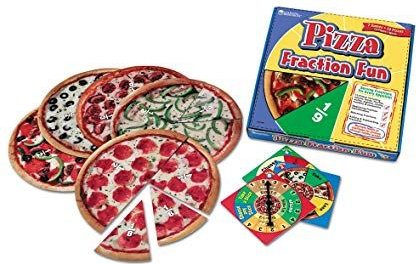
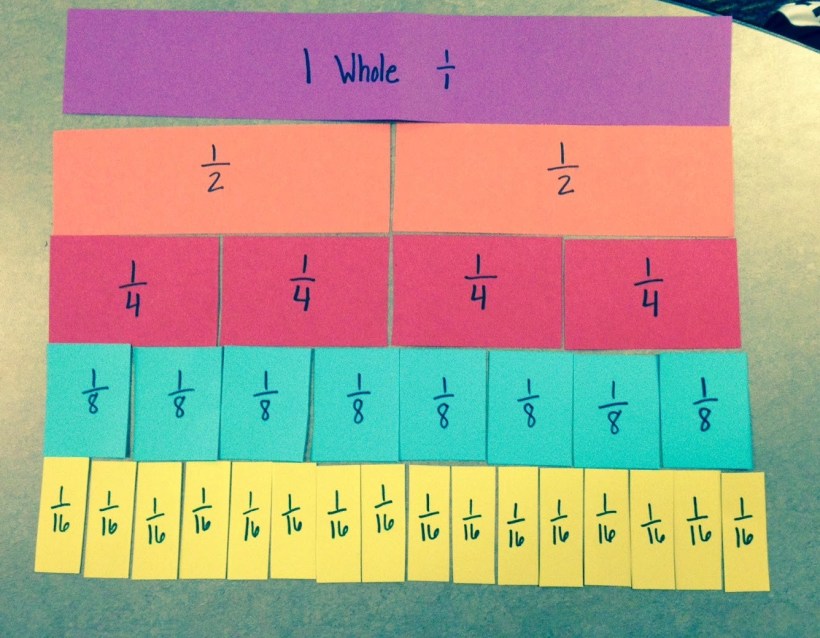
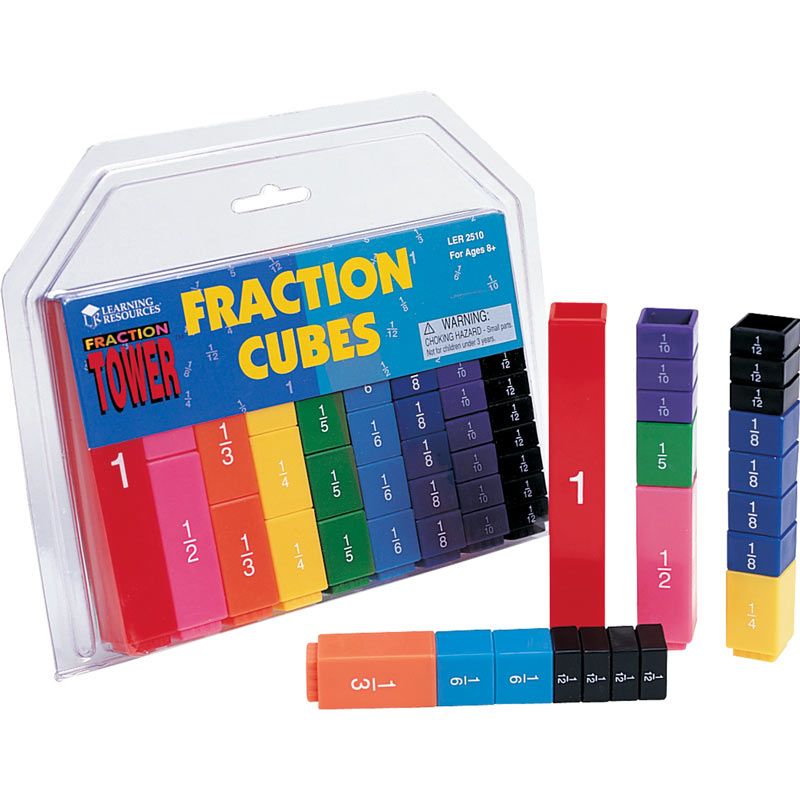
Making a fraction kit with students is a great way for them to begin visually solving these types of problems. Like we were shown in class by Kate, I would also make fraction kits that same way with the whole class following step by step. Like we did in second year, I would use the coloured paper for students so that it’s easier for them to identify the fractions. I would give each student 5 pieces of equally cut paper that is different colours, and have them follow my instructions for cutting and labelling each piece.Similar to what we did in class, I would then give students questions like, how many ways can you make half a pizza or a whole pizza using the fraction strips? I like the idea of having each student in the class randomly receiving a fraction strip and they find partners so that the total of their strips is one whole (Fraction Strips and Fraction Towers). A few years ago when I was doing tutors in the classroom, I was in a grade 2 class and they were being introduced to fractions. There was no use of manipulatives and I could tell that the students were confused. I also struggled a lot with understanding fractions growing up, and I never began to understand them until I was shown manipulatives recently. Now that I know about fraction strips and also the fraction cubes and how useful and beneficial they are to students; I will be using them in my future classroom to help with students learning and understanding. I really liked how we used the pizza fraction kit to solve problems during one of the student presentations. This helped me visualize the fractions better, and this would be helpful for students as well.
-
-
Pizza fraction kit.
I’ve been thinking about what else I could do to help students with understanding fractions. Since there are still times that I myself get confused, what else is there that I can do to help students understand. One of the articles explains how important it is to guide students to make connections between division and fractions. A way that this can be done is by using the equal sharing problems we did in class and also presented in the article (National Council of Teachers of Mathematics, 2005). So providing students with real life examples that establish connections.
-
-
Example of a fraction kit.
-
-
Fraction cube manipulatives.
 Ms. Cerullo's Teaching Tales